How To Configure RAID On The IBM Servers?
- Liny Mathew
- May 15, 2020
- 3 min read
Updated: Jun 5, 2020
RAID stands for Redundant Array of Independent Disks and it involves two key layout goals: Increased data reliability and improved input/output (I/O) performance. When a couple of physical disks are installation to apply the RAID technology, they're said to be in a RAID array. This array distributes data across multiple disks, but the array is visible with the aid of the computer user and operating system as one unmarried disk. RAID can be installed to serve several purposes.
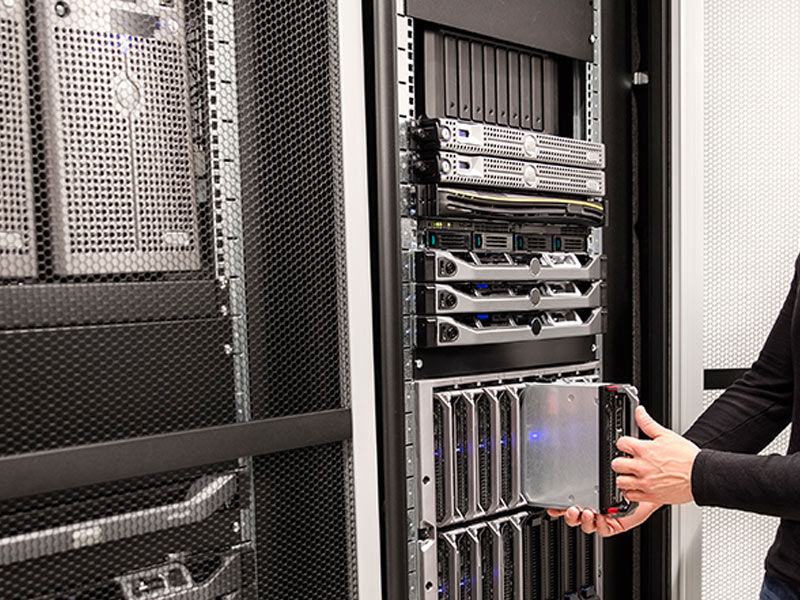
Different styles of RAID levels
Different types of RAID ranges are available. Some are primary RAID levels and a few are a combination of basic levels.
RAID 0
RAID 1
RAID 5
RAID 6
RAID 10
RAID 50
RAID 60
Here, RAID 0, RAID 1, and RAID five are the primary RAID tiers, and the remaining RAID 6, RAID 10, RAID 50, and RAID 60 are the combination of the basic RAID stages.
Each RAID level is defined for a specific purpose. Read through the following table to get a better understanding of the various RAID levels.
RAID 02
None
Data striping without redundancy
Highest performance
No data protection; If one drive fails, all data is lost
RAID 12
Single drive failure
Disk mirroring
Very high performance;
Very high data protection; Very good on write performance
High redundancy cost overhead; Because all data is duplicated, twice the storage capacity is required
RAID 53
Single drive Failure
Block-level data striping with distributed parity
Best cost/performance for transaction-oriented networks;
Very high performance, very high data protection;
Supports multiple simultaneous reads and writes;
Can also be optimized for large, sequential requests
Write performance is slower than RAID 0 or RAID 1
RAID 64
Two-drive failure
Same as RAID 5 with double distributed parity across an extra drive
Offers solid performance with the additional fault tolerance of allowing availability to data if two disks in a RAID group is to fail;
It is recommended to use more drives in the RAID group to make up for performance and disk utilization hits compared to RAID 5Must use a minimum of five drives with two of them used for parity, so disk utilization is not as high as RAID 3 or RAID 5.
Performance is slightly lower than RAID 5
RAID 104
One disk per mirrored stripe (not same mirror)Combination of RAID 0 (data striping) and RAID 1 (mirroring)Highest performance, highest data protection (can tolerate multiple drive failures)High redundancy cost overhead;
Because all data is duplicated, twice the storage capacity is required;
Requires a minimum of four drives
RAID 506
One disk per mirrored stripe
Combination of RAID 0 (data striping) and RAID 5 (single parity drive)Highest performance, highest data protection (can tolerate multiple drive failures)High redundancy cost overhead; Because all data is duplicated, twice the storage capacity is required;
Requires a minimum of four drives
RAID 608
Two disks per mirrored stripe
Combination of RAID 0 (data striping) and RAID 6 (dual-parity drives)Highest performance, highest data protection (can tolerate multiple drive failures)High redundancy cost overhead; Because all data is duplicated, twice the storage capacity is required;
Requires a minimum of four drives
Configuring RAID arrays
Through the Setup utility, you can access utilities to configure RAID arrays.
The specific procedure for configuring arrays depends on the RAID controller that you are using. For details, see the documentation for your RAID controller. To access the utility for your RAID controller, complete the following steps:
Turn on the server. Note: Approximately 10 seconds after the server is connected to power, the power-control button becomes active.
When prompted, <F1 Setup> is displayed, press F1. If you have set an administrator password, you must type the administrator password to access the full Setup utility menu. If you do not type the administrator password, a limited Setup utility menu is available.
Select System Settings > Storage.
Press Enter to refresh the list of device drivers.
Select the device driver for your RAID controller and press Enter.
Follow the instructions in the documentation for your RAID controller.
IBM servers are the best servers for Artificial Intelligence, HPC, and advanced analytics. They are suitable for SMBs as well as corporates with the hardware and software configurations and databases.IBM Server rental from the trusted company offers efficient, reliable, and secure servers within the stringent budget.


Comments